
You open a familiar DeFi dashboard to check your portfolio and see a number that looks reassuring. Then you inspect the wallet itself: a token approval you no longer remember, a lending position spread across several contracts, and a pending transaction whose final cost is not yet obvious. The balance was simple. The position was not.
This is the central challenge of modern Web3 portfolio management. A wallet is no longer merely a place where assets sit. It is an interface to contracts, permissions, bridges, vaults, exchanges, and applications that may represent value in very different ways. For US-based DeFi users, the practical question is therefore not just “What do I own?” but “What can my wallet authorize, what does each position depend on, and what will this transaction actually do?”
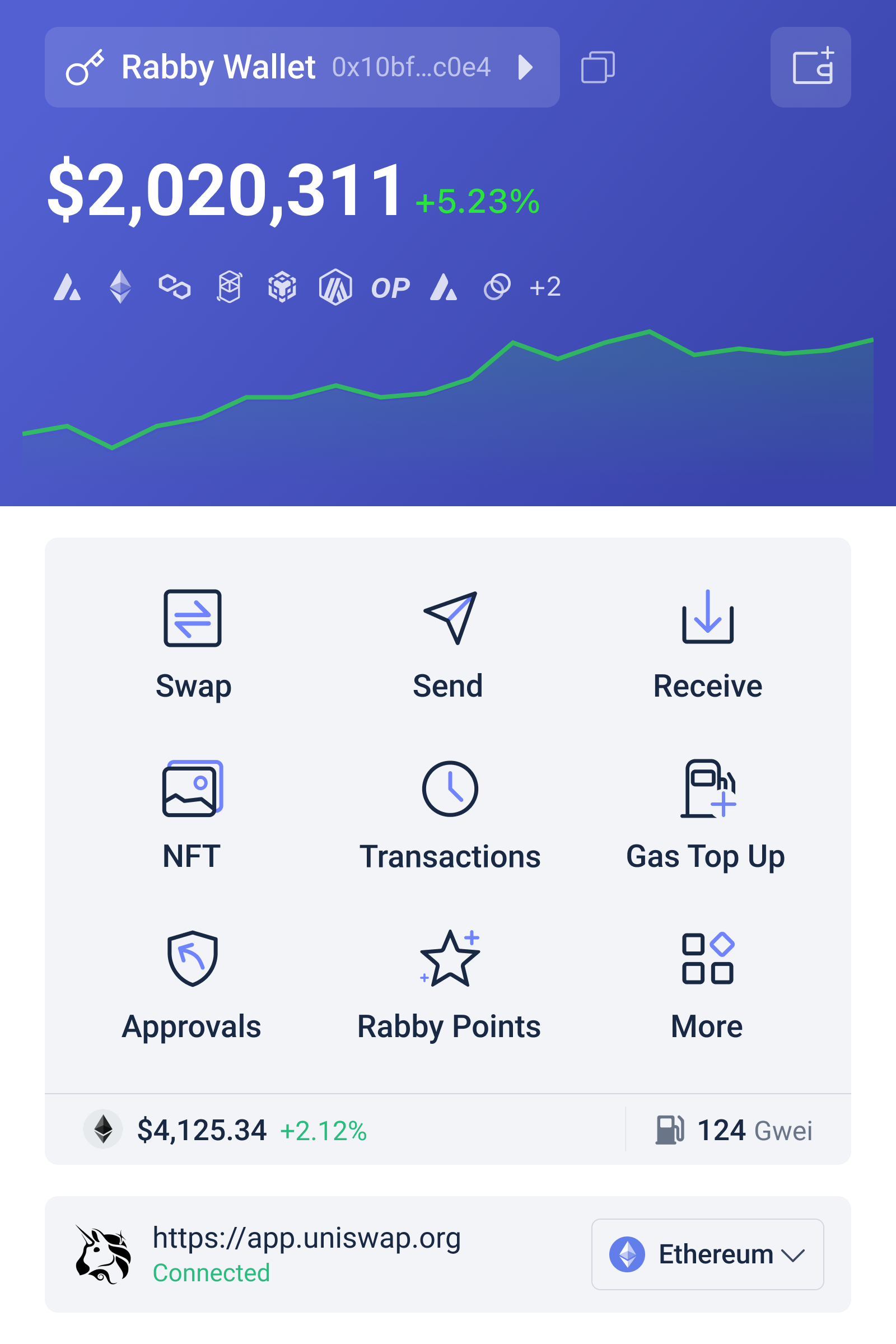
The portfolio is not the balance
A blockchain wallet typically displays assets associated with an address, but that list is only the visible layer of a broader financial state. A token balance is relatively straightforward: the token contract records that an address controls a quantity. A liquidity position, by contrast, may be represented by a separate position token or by data stored inside a pool contract. A lending deposit can involve a receipt token whose value changes according to interest. A staked asset may be locked under rules that determine when and how it can be withdrawn.
This creates a useful mental model: a DeFi portfolio is a graph of claims and permissions, not a bag of coins. The address is connected to token contracts, protocol contracts, collateral relationships, approvals, and sometimes off-chain interfaces that help interpret the data. Portfolio tracking becomes difficult when a dashboard compresses that graph into one dollar figure without showing the assumptions underneath.
The difficulty is not merely visual. Smart contracts execute deterministic instructions, but users often encounter them through human-friendly buttons such as “deposit,” “swap,” or “stake.” Those labels describe intent at a high level; they do not necessarily reveal every contract call, token approval, recipient, amount, or condition involved. A transaction simulator can help bridge that gap by estimating the resulting state before signing, though simulation remains an analysis of a proposed execution rather than a guarantee of future safety.
What smart contract interaction really involves
Most DeFi actions contain more than one layer of interaction. A first-time swap may require an approval allowing an exchange contract to spend a token. The swap itself then calls the exchange or routing contracts. A lending transaction may approve an asset, deposit it, and return a receipt representing the user’s position. A cross-chain action can add messaging, bridge custody, or relayer dependencies.
Approvals deserve particular attention because they are easy to misunderstand. An approval does not transfer funds immediately; it grants another contract the ability to move specified tokens under the rules recorded by the token contract. That distinction matters, but it should not create false comfort. A broad or unlimited allowance can expand the consequences of a later compromise or malicious contract behavior. Reviewing and reducing obsolete allowances is therefore a form of portfolio hygiene, not just an emergency response.
Transaction simulation addresses a different risk. It attempts to show what the proposed call would change: which assets may leave the wallet, which assets may arrive, whether a contract call reverts, and sometimes whether a suspicious permission or unexpected interaction is involved. This is especially valuable when a dApp hides multiple calls behind one button. Still, simulation can be limited by changing blockchain state, incomplete protocol decoding, unusual contract logic, oracle updates, and attacks that behave differently under simulated conditions.
That limitation is important. Security tools are best understood as layers of evidence. A simulation can expose a mismatch between the user’s intention and the transaction’s likely effect, but it cannot establish that a protocol is solvent, that an oracle will remain accurate, or that a website has not been compromised after the transaction was prepared. The user still needs to check the domain, network, recipient, token, amount, and economic context.
Why dApp integration changes the wallet’s job
Traditional financial applications tend to present one controlled interface over one account system. DeFi is more modular. A wallet connects the user to many independent applications, each with its own contracts, assumptions, upgrade paths, and failure modes. Good dApp integration therefore is not simply a matter of making a connection button work. It should preserve context as the user moves from the application’s interface to the wallet’s signing screen.
This is where an advanced EVM wallet can provide practical value. Rabby’s recent positioning around Ethereum and EVM networks emphasizes a wallet designed for on-chain activity across multiple compatible chains, with transaction review and security features integrated into the signing flow. Users evaluating that workflow can explore https://rabby-wallet.at/ as a starting point, while remembering that no wallet removes the need for independent judgment.
Chain support also introduces a subtle portfolio-tracking problem. The same token symbol may refer to different contracts on different networks. A user may hold a native asset on one chain, a bridged representation on another, and a wrapped version elsewhere. A dashboard that groups these under one ticker can be convenient for estimating total exposure, but it can also hide liquidity, redemption, bridge, and counterparty differences.
For that reason, a useful portfolio view should answer at least three questions. What asset or claim is this? Which contract or protocol creates it? What must remain true for the displayed value to be realized? The third question is often neglected. A receipt token may have a quoted market value, but withdrawal liquidity, utilization, collateral quality, or bridge functionality may determine whether that value is immediately accessible.
Comparing three ways to track a DeFi portfolio
Wallet-native tracking
Tracking inside the wallet is usually the most convenient starting point. It keeps balances, networks, transaction history, and signing activity close together. That proximity helps users connect a proposed action with the assets it may affect. The trade-off is coverage and interpretation: a wallet may not fully explain every protocol position, complex vault strategy, or taxable event.
Independent portfolio dashboards
Dedicated portfolio tools can offer richer historical views, protocol categorization, performance calculations, and aggregation across wallets. They are often better for measuring exposure over time. Their weakness is that they may rely on indexing assumptions, estimated prices, or labels that simplify complicated positions. Connecting a wallet to another service can also expand the privacy surface, since address activity may become easier to associate and analyze.
Manual on-chain verification
Block explorers and contract interfaces provide the closest view to the underlying records. They are valuable when a balance looks wrong, a transaction is disputed, or a position is too unusual for an aggregator to interpret confidently. But they are slower and technically demanding. Raw storage values, event logs, proxy contracts, and token decimals are not designed for casual reading.
The strongest approach is not choosing one winner. It is assigning each tool a job. Use the wallet for transaction-time context and permission awareness, an aggregator for portfolio-level organization, and direct on-chain inspection when the value or risk is high enough to justify deeper verification. This division of labor is more robust than treating any single interface as an authoritative view of reality.
A practical framework for safer interaction
Before signing, separate the action into four questions: intention, authority, effect, and reversibility. Intention asks whether the transaction matches what you meant to do. Authority asks which contract may spend tokens or alter a position. Effect asks what assets and permissions are likely to change. Reversibility asks whether the result can be undone, and at what cost.
This framework exposes a common misconception: a transaction can be technically successful and still be economically harmful. A swap may execute exactly as coded while producing poor price execution. A deposit may succeed while placing funds into a strategy with withdrawal delays. An approval may be valid while remaining unnecessarily broad. “Successful” on-chain means the requested computation completed; it does not mean the user received a good outcome.
Users should also distinguish simulation from risk assessment. Simulation is strongest for transaction-level questions: expected transfers, contract calls, reverts, and apparent approval changes. Risk assessment is broader and includes protocol governance, upgradeability, liquidity, oracle design, bridge dependence, token concentration, and the possibility that the user is interacting with a counterfeit front end. The two processes overlap, but neither substitutes for the other.
For active DeFi users, a repeatable routine is more valuable than a one-time security check. Review the network and contract, inspect the expected balance changes, question unfamiliar approvals, compare the displayed asset with the underlying address, and consider whether the position’s value depends on a bridge, oracle, or thin market. On larger transactions, a small test or staged execution may reduce operational risk, although it cannot eliminate smart contract or market risk.
What to watch as wallets become portfolio interfaces
The direction of travel is clear even if the endpoint is not. As users interact with more EVM chains and increasingly composable protocols, wallets will need to do more than display balances and request signatures. They will need to explain state changes across multiple contracts in language users can evaluate, while preserving enough technical detail for advanced review.
The hard problem is not simply better design. It is interpretation under uncertainty. A wallet can decode a call, estimate a balance change, and flag a known pattern, but it may not know whether a protocol’s economic assumptions are sound or whether a newly deployed contract deserves trust. Future improvements will be most useful when they show confidence boundaries rather than presenting every warning as certainty.
For readers choosing a workflow today, the practical implication is straightforward: treat wallet integration, portfolio tracking, and transaction simulation as complementary layers. The wallet is the signing boundary, the tracker is the accounting lens, and the blockchain is the final record—although even that record may require interpretation. The safer habit is to move deliberately between those layers instead of allowing one polished interface to conceal the complexity beneath it.
Frequently Asked Questions
Does transaction simulation guarantee that a DeFi transaction is safe?
No. Simulation can reveal likely state changes, unexpected transfers, and some failures before signing. It cannot guarantee that a protocol is trustworthy, that market conditions will remain stable, or that every contract behavior has been modeled correctly. Use it as an important review layer, not as a certificate of safety.
Why can a wallet balance differ from a portfolio tracker?
Wallets and trackers may use different token lists, pricing sources, chain coverage, and methods for valuing protocol positions. A tracker may estimate a vault or lending position that the wallet shows only as a receipt token. When values disagree, compare the underlying contract, network, quantity, and pricing assumptions rather than relying on the headline total.
Should DeFi users revoke every token approval?
Not necessarily. Revoking approvals can improve control, but it may add transaction costs and inconvenience, and it does not repair every other risk. A more useful policy is to review approvals by contract, token, amount, and ongoing need, then remove permissions that are obsolete or unnecessarily broad.